Sustainability and ethical practice are crucial for ensuring the health of our planet and the well-being of future generations.
Bloch - 3 key sustainability initiatives
-
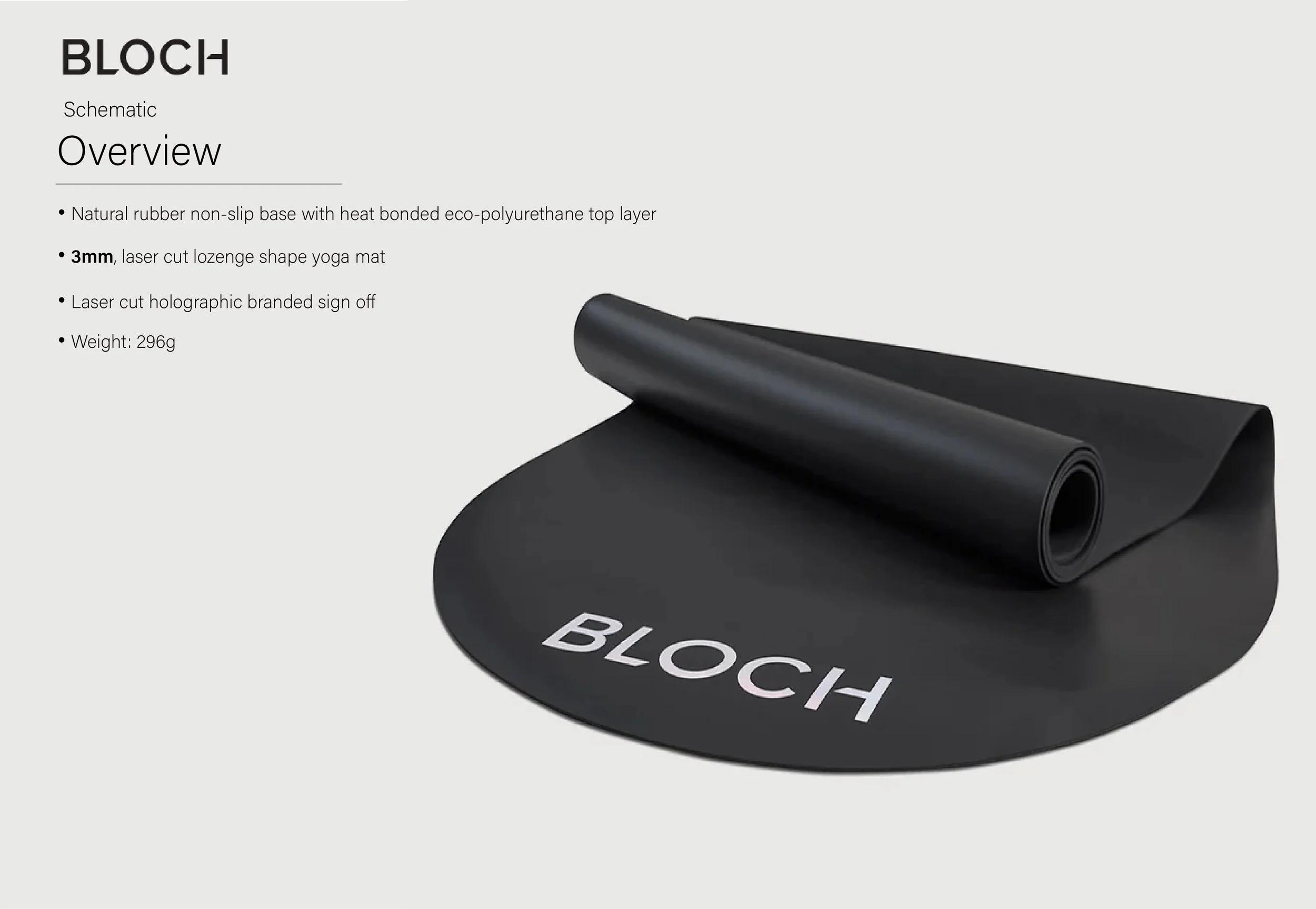
The Ethical Yoga Mat
Designed for the modern yogi and dancer alike, the BLOCH mat offers an eco-friendly alternative without compromising on quality or performance.
The 3mm yoga mat delivers superior grip and cushioning, ensuring stability during poses and comfort during practice. Its textured base enhances traction and rubber feel upper, allowing the user to focus on their movements without the distraction of slipping. The lightweight design makes it easy to transport.
Constructed with a natural rubber non-slip base and eco-polyurethane upper, the biodegradable yoga mat is crafted to break down safely in the environment once its lifespan has ended. Heat bonding the layers together, ensures the mat is free from harmful chemicals and toxins, making it low odour.
-
The bio-based active stretch
Typically, activewear is made from synthetic fabrics such as nylon and polyester, which, while durable and moisture-wicking, can persist in the environment for hundreds of years post-disposal.
At Bloch, I collaborated with our advanced fabric mill in China to develop a satin lustre, true compression active stretch quality using a bio-based polyamide 'TERRYL'. This quality exhibited the necessary qualities for activewear, including sweat wicking, dimensional stability, durability, breathability and UV coverage.
One key advantage of biodegradable activewear is its ability to reduce plastic waste. As consumers become more environmentally conscious, the demand for apparel that does not contribute to landfill overflow is increasing. Biodegradable fabrics offer a welcome solution, allowing athletes and fitness enthusiasts to engage in their activities while minimising their environmental impact.
Challenges remain in the widespread adoption of biodegradable activewear fabrics predominantly surrounding a lack awareness of the consumer and environmental benefits. Additionally, the infrastructure for composting or recycling such products is not universally available, making it crucial for brands to partner with experts to create effective end-of-life solutions.
Biodegradable activewear fabric represents a significant advancement in sustainable fashion, merging the demands of performance with environmental responsibility. As the fitness industry grows, so does the need for materials that not only support physical activity but also lessen the ecological footprint.

-
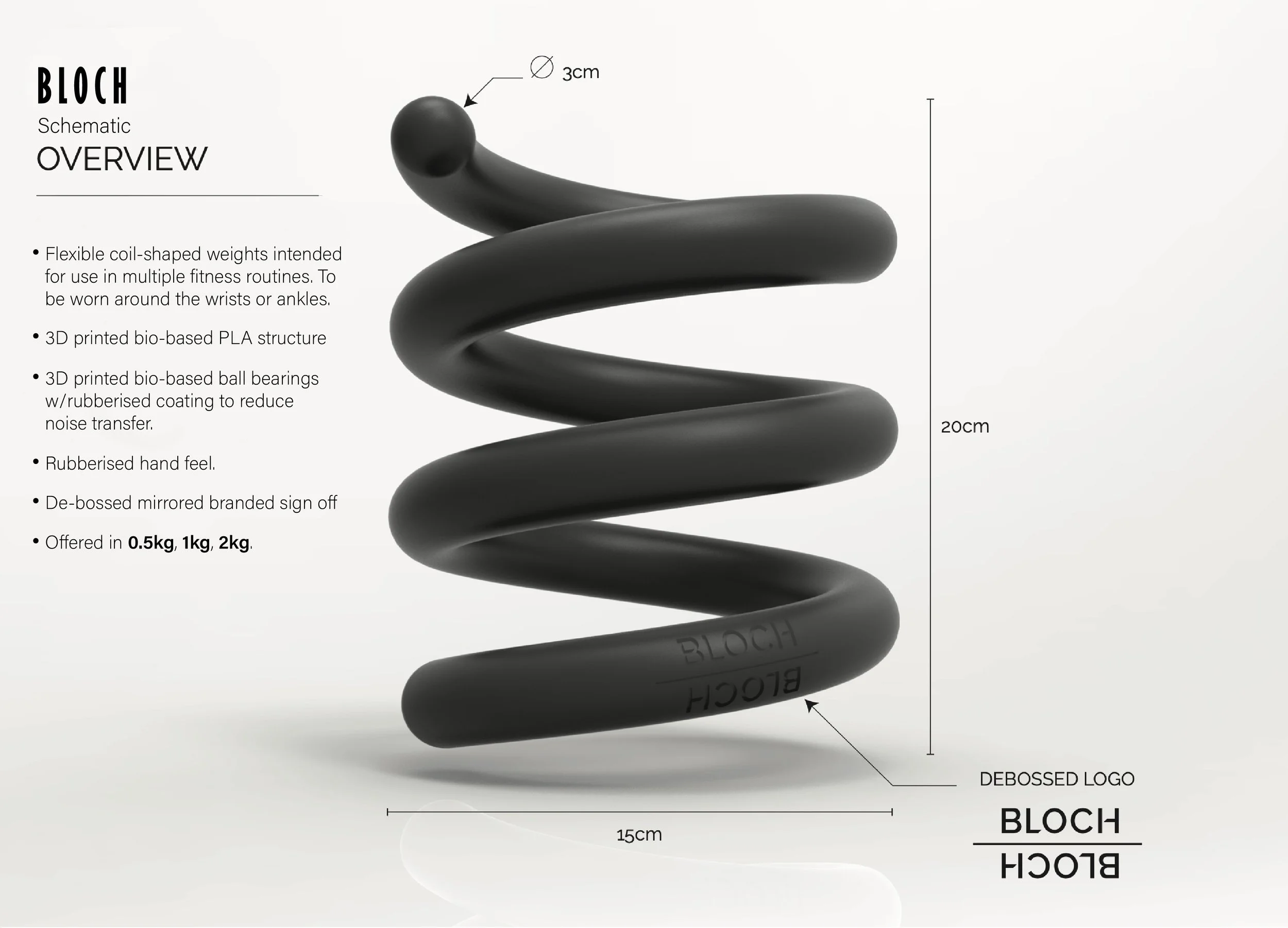
The 3D Printed Weight
The 3D printed hand weight is engineered from a bio-based PLA strand and printed into a flexible coil spring shape for ease of wear around the wrists and ankles, as desired.
It stands out due to its ability to be tailored to individual needs. Users can select interchangeable weight increments suited to their current fitness level utilising the weighted ball bearings provided, allowing for a gradual progression as strength improves. The various ball bearings are of identical dimension to ensure it feels balanced through the coil.
3D printing technology has revolutionised various industries, and the fitness sector is no exception.
By leveraging 3D printing technology, we can reduce waste by producing items on demand. This means less excess inventory and fewer resources used in production and shipping. By employing biodegradable or recyclable materials in the printing process, we can can further minimise manufacturing resources, process and storage space and reduce the environmental impact.
Moreover, 3D printing allows for rapid prototyping, making it an ideal candidate for brands and loyal brand followers to collaborate on new concepts and unique product launches.